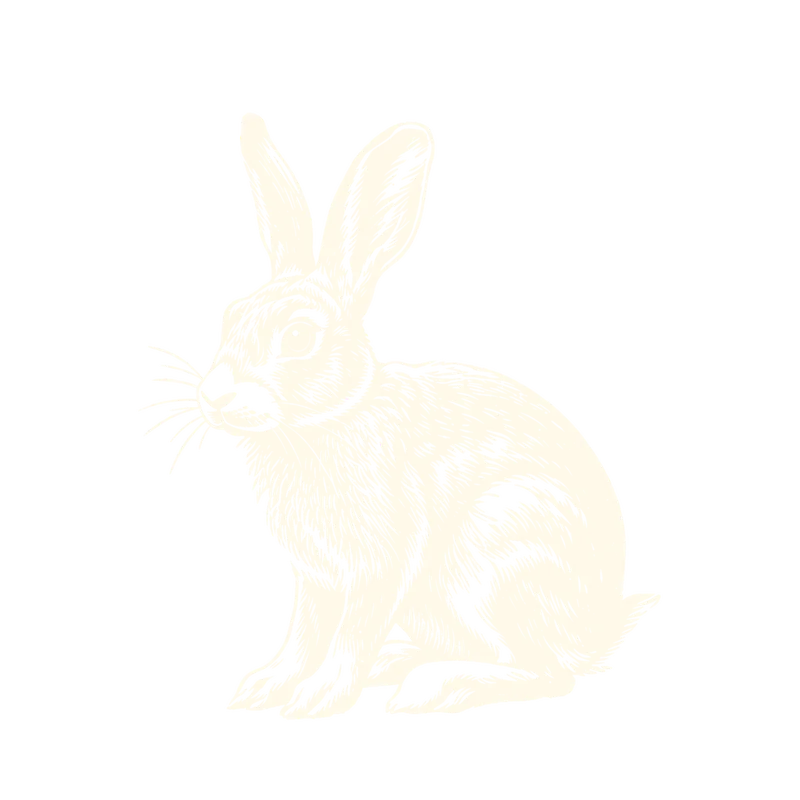
Tradition gives the Rabbit a quiet kind of strength. It is the peacemaker of the zodiac, the one who smooths a tense dinner or finds the kinder way to say no. Folk sources praise its taste, manners, and careful judgment. They also point out that a love of calm can lead the Rabbit to sidestep conversations it really needs to have.
The Rabbit is fourth in line and belongs to the branch 卯 (mǎo), a wood branch in tradition. Folk descriptions often connect the sign with softness and good manners rather than raw force.
Years of the Rabbit
Each Rabbit year begins at Lunar New Year. The eight most recent are:
- 2023 Water Rabbit: Jan 22, 2023 – Feb 9, 2024
- 2011 Metal Rabbit: Feb 3, 2011 – Jan 22, 2012
- 1999 Earth Rabbit: Feb 16, 1999 – Feb 4, 2000
- 1987 Fire Rabbit: Jan 29, 1987 – Feb 16, 1988
- 1975 Wood Rabbit: Feb 11, 1975 – Jan 30, 1976
- 1963 Water Rabbit: Jan 25, 1963 – Feb 12, 1964
- 1951 Metal Rabbit: Feb 6, 1951 – Jan 26, 1952
- 1939 Earth Rabbit: Feb 19, 1939 – Feb 7, 1940
Because Lunar New Year can land anywhere from late January to mid-February, birthdays in that window need checking. In 1999, for example, the Rabbit year started late, on Feb 16, 1999, so early February 1999 still belonged to the Earth Tiger. In 1987 the opposite happened: the Rabbit year began on Jan 29, 1987, and births from that day on are Rabbits. BaZi charts do not follow Lunar New Year; they switch at Start of Spring, 立春 (Lì Chūn), which in 2027 is February 4. Check any date with the Chinese zodiac calculator.
Element by year
| Water Rabbit | 2023, 1963 |
|---|---|
| Metal Rabbit | 2011, 1951 |
| Earth Rabbit | 1999, 1939 |
| Fire Rabbit | 1987 |
| Wood Rabbit | 1975 |
The five elements, 五行 (wǔ xíng), give each Rabbit year a different flavor in traditional readings.
Water Rabbit (1963, 2023). Black and blue water deepens the Rabbit’s sensitivity. This version is called intuitive and empathetic, with a gift for listening. It may take criticism to heart.
Metal Rabbit (1951, 2011). With metal’s white and gold, the Rabbit gains backbone. Tradition describes a clear-minded, discerning person with firm tastes. The note is not to let high standards turn into distance.
Earth Rabbit (1939, 1999). Yellow and brown earth makes for a practical, home-loving Rabbit. It values security and builds slowly. Folk readings suggest it can be overly careful about new ventures.
Fire Rabbit (1927, 1987). Red fire adds warmth and expressiveness. This Rabbit is described as more outgoing and openly affectionate than most. Moods may rise and fall quickly.
Wood Rabbit (1975). Wood is green, the color of new leaves. The Wood Rabbit is pictured as generous and cooperative. It may say yes too readily to keep everyone happy.
Traditional personality traits
The Rabbit is commonly described as gentle, attentive to detail, and devoted to harmony. What tradition admires in it:
- Gentleness. It knows how to make people feel at ease.
- Care with details. Many readings mention an eye for order and finish.
- A wish for harmony. It works to keep a group on good terms.
It is also commonly described as conflict-avoidant. What tradition asks it to watch:
- Avoiding conflict. Peace kept by silence can leave issues unresolved.
- Sidestepping hard talks. Some conversations need to happen sooner.
In relationships and work
The traditional Rabbit is a considerate, loyal partner who creates a comfortable home. It reads moods well and dislikes harsh words. A helpful reflection is to state needs directly rather than hoping they will be noticed.
At work, folk descriptions link the Rabbit with tasks that reward care and judgment, such as careful finishing and keeping a group on good terms. It tends to prefer a calm environment. Many Rabbit-year people take this as a reminder that a short, honest conversation can save weeks of quiet tension.
Best and challenging matches
These pairings come from classical branch rules. The compatibility calculator explains any pair.
Traditionally harmonious:
- Three Harmony, 三合 (sān hé) with the Pig and the Goat, the 亥卯未 (hài mǎo wèi) group, traditionally a wood combination: Rabbit and Pig, Rabbit and Goat.
- Six Harmony, 六合 (liù hé) with the Dog, the 卯戌 (mǎo xū) pair: Rabbit and Dog.
Traditionally challenging:
- Clash, 六冲 (liù chōng) with the Rooster, 卯酉 (mǎo yǒu): Rabbit and Rooster.
- Harm, 六害 (liù hài) with the Dragon, 卯辰 (mǎo chén): Rabbit and Dragon.
- Punishment, 三刑 (sān xíng) with the Rat, 子卯 (zǐ mǎo), traditionally named the punishment of rudeness: Rat and Rabbit.
Tradition uses these labels to describe dynamics, and the Rabbit’s natural tact is often seen as an asset in the trickier pairings.
The Rabbit in 2027
The Fire Goat year, 丁未 (Dīng Wèi), opens on February 6, 2027. In Chinese tradition, the Rabbit’s branch 卯 (mǎo) joins the Pig’s 亥 (hài) and the year’s 未 (wèi) in the Three Harmony group 亥卯未 (hài mǎo wèi). The traditional reading of Tai Sui, 太岁 (Tài Suì, the year’s guardian star in folk belief), therefore sees the Rabbit as in harmony with the year. Tradition considers this a fitting time for cooperation and shared projects. Treat it as a theme to reflect on; the Rabbit 2027 forecast and the Fire Goat year overview go into more detail.
Frequently asked questions
Does the Rabbit face a clash in 2027?
Tradition pairs 卯 (mǎo) with 酉 (yǒu), the Rooster’s branch, as a clash. 2027 is not a Rooster year. The Goat year actually sits in the Rabbit’s own harmony group, so the traditional mood for Rabbits is cooperative rather than tense.
Was 2023 a Rabbit year?
Yes. The 2023 Water Rabbit year ran from Jan 22, 2023 to Feb 9, 2024. People born in the first three weeks of January 2023 belong to the Water Tiger year.
Why do Rabbit and Goat appear together so often?
They share the 亥卯未 (hài mǎo wèi) Three Harmony group with the Pig. That same group is why tradition reads 2027, a Goat year, as harmonious for Rabbits. Your full chart adds more layers; see the BaZi calculator.